
In export operations, businesses typically focus on preparing documentation, booking shipping, selecting vessel schedules, and completing customs procedures to ensure timely delivery. However, alongside these familiar processes, there are specialized requirements that can directly impact the customs clearance of goods in the importing country.
Fumigation is one such requirement.
For many businesses, fumigation is often only mentioned when requested by partners or shipping companies. This leads to some common misunderstandings, such as the belief that all shipments must be fumigated, or conversely, that goods other than agricultural products do not need to be fumigated.
In fact, fumigation requirements depend on the regulations of each country, the type of goods, and especially... packaging materials It is used. A proper understanding of the nature of fumigation will help businesses proactively develop export plans, minimize costs, and ensure timely delivery.
What is fumigation for export goods?
Fumigation is a treatment process aimed at eliminating insects and other harmful organisms that may be present in goods or packaging materials before export.
The purpose of this treatment is not to preserve the goods but to comply with the phytosanitary regulations of the importing country, contributing to preventing the spread of pests between countries through international trade.
This is a requirement applied by many markets to certain product categories or packaging materials that may carry pests or diseases.
Not all shipments need fumigation?
One of the most common misconceptions is that businesses assume all exports must be fumigated.
In reality, whether or not fumigation is necessary depends on several factors, the most important of which are:
Regulations of the importing country.
Type of goods exported.
The type of packaging material used.
Customer or partner requirements.
In many cases, it is wooden pallets, wooden crates, or wooden boxes The issue that needs to be addressed is the subject of the investigation, not the goods themselves.
Conversely, if a business uses plastic pallets, metal pallets, or materials not subject to regulation, the fumigation requirement may not apply.
This shows that businesses should not apply a single approach to all shipments, but should check the specific requirements of each market right from the export preparation stage.
ISPM 15 and its relationship with fumigation
When it comes to fumigation, many businesses often hear about standards. ISPM 15.
This is an international standard established by International Plant Protection Convention (IPPC) Issuing regulations on the handling of wooden packaging materials used in international trade to limit the spread of pests.
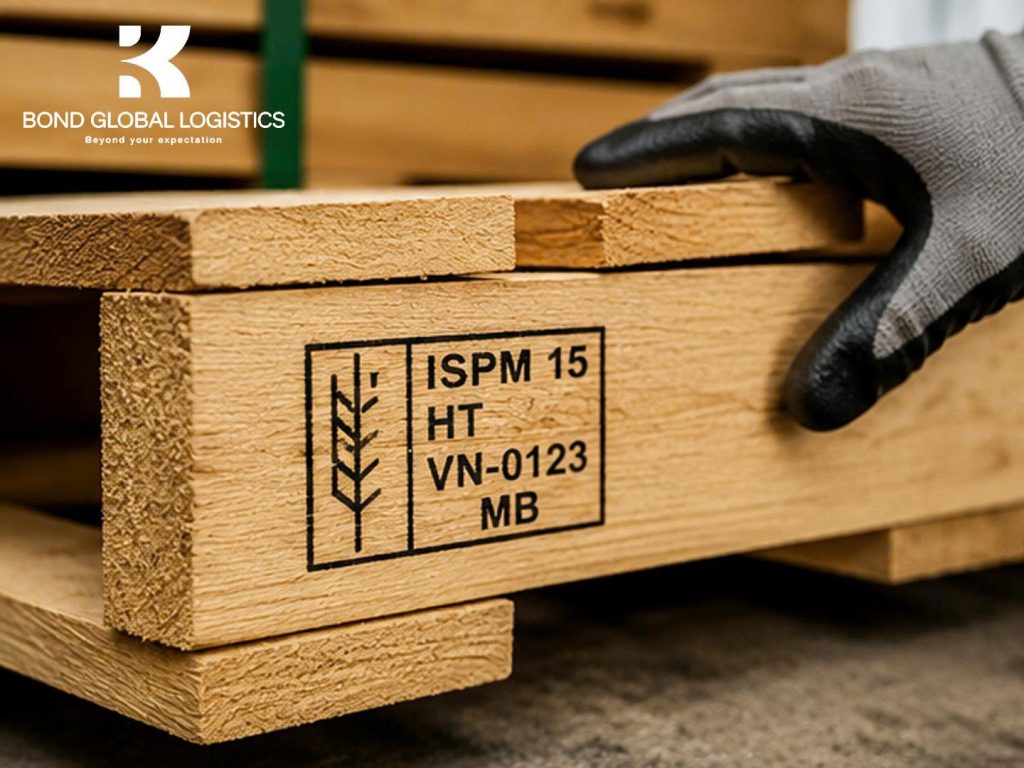
It is important to understand that ISPM 15 does not mean fumigation..
According to this standard, wooden packaging materials may be treated by one of the accepted methods, the most common of which are:
Heat Treatment (HT) – Heat treatment.
Methyl Bromide (MB) – Fumigation with Methyl Bromide (only applied in some countries and within permitted regulations).
After processing to meet the requirements, the pallet or wooden material will be stamped with ISPM 15 to demonstrate compliance with international standards.
Therefore, when a business is required to “meet ISPM 15,” it does not necessarily mean fumigation is mandatory, but rather that they need to determine the appropriate treatment method in accordance with current regulations.
What is the role of a fumigation certificate?
For shipments that require fumigation, the processing unit will issue a permit. Fumigation Certificate.
This is a document confirming that the goods or packaging materials have been processed in accordance with regulations and may be required by authorities or partners during inspection and customs clearance.
Having all the necessary documents prepared from the outset will help businesses minimize the risk of having to supplement or reprocess documents at the port of destination, thereby reducing warehousing and storage costs and minimizing disruptions to delivery schedules.
Why should businesses proactively check fumigation requirements?
If the need for fumigation is only discovered after the goods have been packed into containers or are ready for export, businesses may have to adjust their shipping plans or incur additional time and costs.
Therefore, checking the requirements of the importing market right from the export planning stage will help businesses:
Proactively choose the most suitable packaging option.
Prepare all required documents.
Minimize container demurrage and storage fees.
Ensure timely delivery.
Minimize risks during the customs clearance process.
This is a small preparatory step, but it can make a big difference to the efficiency of the entire shipment.
Recommendations from Bond Global Logistics
Fumigation is not a requirement for all export shipments, but for those subject to regulation, proper identification from the outset will help businesses be more proactive in the implementation process.
Before exporting, businesses should check the regulations of the importing market, assess the type of packaging materials to be used, and prepare all necessary documents. Simultaneously, early coordination with the logistics company will help select the appropriate handling method, minimize costs, and ensure timely delivery.
With experience in implementing various types of international transportation, Bond Global Logistics We are always ready to partner with businesses in advising on logistics solutions, assisting in document preparation, and coordinating the implementation of specialized requirements, contributing to a smoother and more efficient export process.