During the implementation of transportation projects, Bond Logistics frequently encounters shipments with dimensions and weights exceeding the limits of standard containers. Each project presents unique requirements regarding cargo survey, selection of lifting equipment, and the development of transportation plans to ensure safety throughout the journey.
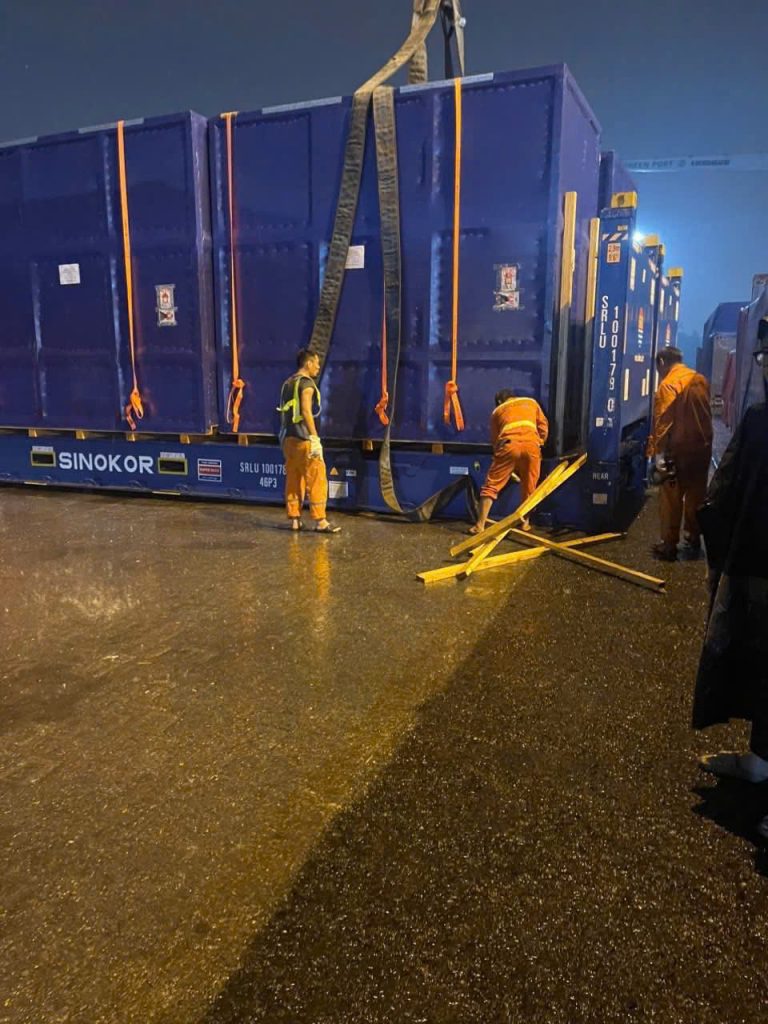
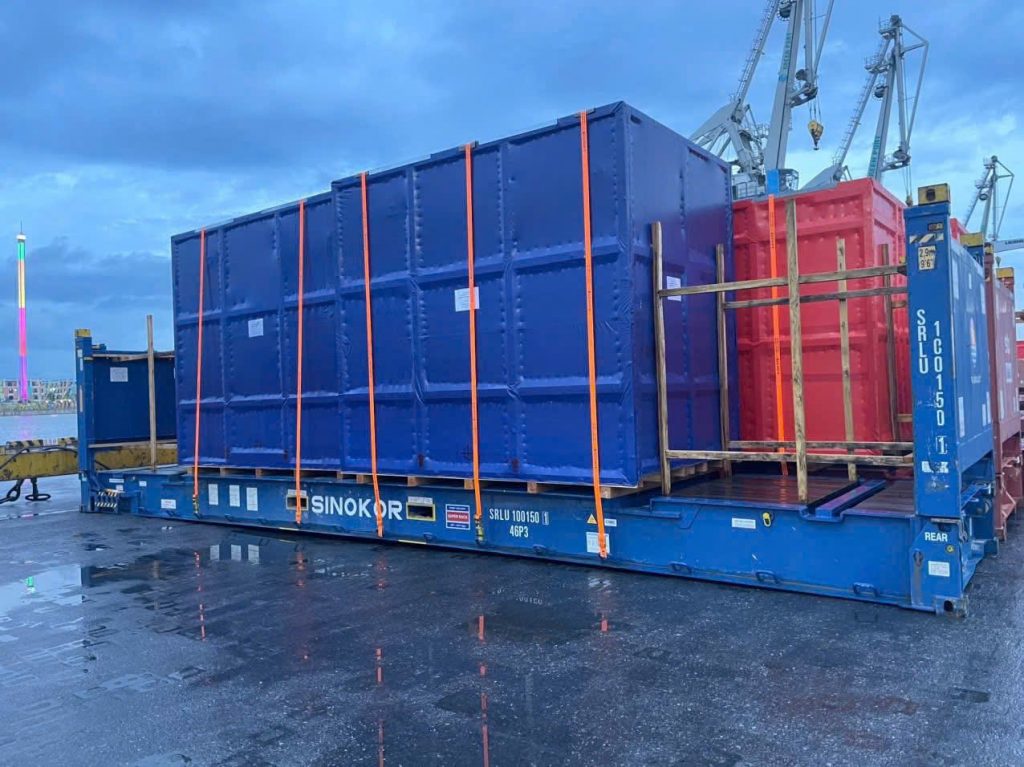
Recently, Bond Global Logistics successfully transported an oversized and overweight shipment. Flat Rack Container. Looking at the image, it's clear that the goods are not placed in sealed containers as usual, but are lifted directly onto a flat rack before being supported and secured. This is not just a choice of container type, but the result of an assessment of the goods' characteristics and actual operating conditions.
Why wasn't the shipment using standard containers?
Dry containers are designed to transport goods that fit neatly within a fixed, enclosed space. However, for shipments exceeding length, width, or height limits, the use of standard containers is no longer suitable.
In this case, the Flat Rack Container is the preferred solution due to its open design on both sides and top, allowing for the transport of machinery, industrial equipment, or structures of special dimensions while still meeting the shipping line's operational requirements.
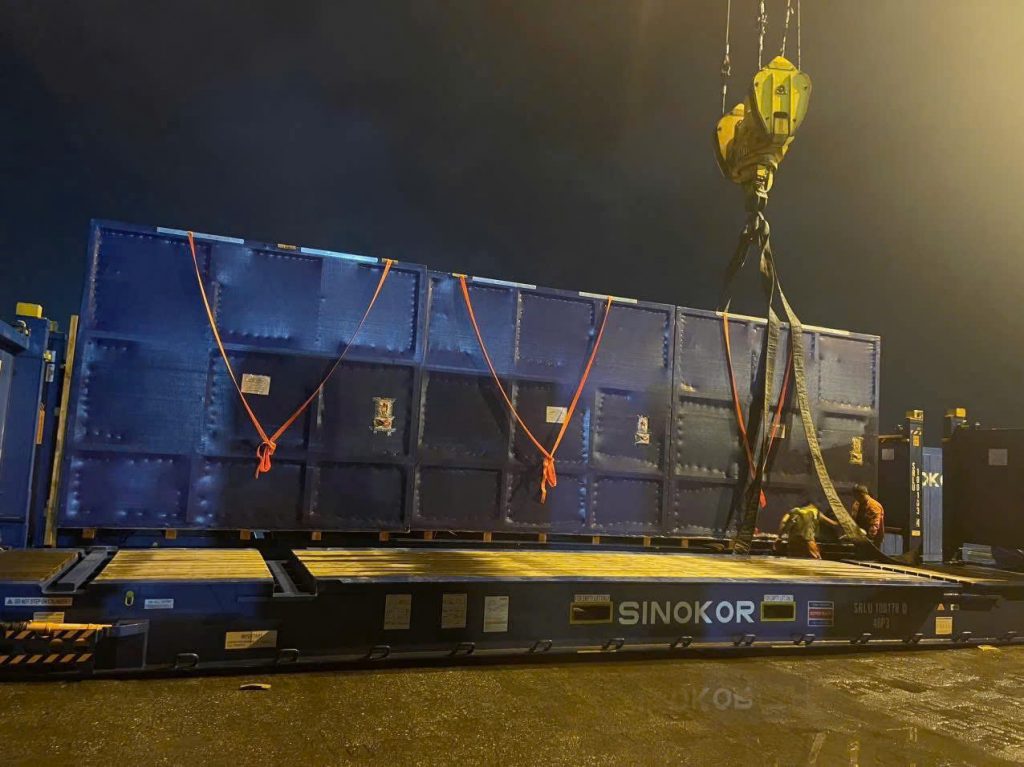
This open space also facilitates lifting operations using cranes – a nearly mandatory requirement for many oversized and overweight shipments.
Lifting and handling is not simply about "loading goods into containers."“
For oversized and overweight cargo, the lifting process is a crucial technical step in the overall transportation plan.
Before lifting, the technical team needs to determine the weight, center of gravity, and appropriate lifting points to ensure the load is evenly distributed throughout the operation. Incorrect selection of the lifting point or failure to consider the center of gravity of the cargo can cause the cargo to tilt, rotate, or generate localized stress, affecting the safety of both the cargo and the lifting equipment.
Therefore, lifting and handling plans are always prepared in parallel with transportation plans, instead of only being implemented when the goods arrive at the port.
After placing it on a flat rack, what happens next?
Even after the goods are in place, the job isn't finished.
Dunnage materials are placed between the cargo and the flat rack to distribute the load, increase the contact area, and provide stability to the cargo throughout the journey. Simultaneously, the lashing system is designed based on the weight, shape, and characteristics of each shipment to control movement when the vessel accelerates, decelerates, turns, or is subjected to waves during sea transport.
Seemingly minor details such as the placement of supports, the direction of lashing, or the anchoring points all directly affect the stability of the cargo throughout the handling process.
Recently, Bond Global Logistics successfully transported an oversized and overweight shipment. Flat Rack Container. Looking at the image, it's clear that the goods are not placed in sealed containers as usual, but are lifted directly onto a flat rack before being supported and secured. This is not just a choice of container type, but the result of an assessment of the goods' characteristics and actual operating conditions.
Why wasn't the shipment using standard containers?
Dry containers are designed to transport goods that fit neatly within a fixed, enclosed space. However, for shipments exceeding length, width, or height limits, the use of standard containers is no longer suitable.
In this case, the Flat Rack Container is the preferred solution due to its open design on both sides and top, allowing for the transport of machinery, industrial equipment, or structures of special dimensions while still meeting the shipping line's operational requirements.
This open space also facilitates lifting operations using cranes – a nearly mandatory requirement for many oversized and overweight shipments.
Lifting and handling is not simply about "loading goods into containers."“
For oversized and overweight cargo, the lifting process is a crucial technical step in the overall transportation plan.
Before lifting, the technical team needs to determine the weight, center of gravity, and appropriate lifting points to ensure the load is evenly distributed throughout the operation. Incorrect selection of the lifting point or failure to consider the center of gravity of the cargo can cause the cargo to tilt, rotate, or generate localized stress, affecting the safety of both the cargo and the lifting equipment.
Therefore, lifting and handling plans are always prepared in parallel with transportation plans, instead of only being implemented when the goods arrive at the port.
After placing it on a flat rack, what happens next?
Even after the goods are in place, the job isn't finished.
Dunnage materials are placed between the cargo and the flat rack to distribute the load, increase the contact area, and provide stability to the cargo throughout the journey. Simultaneously, the lashing system is designed based on the weight, shape, and characteristics of each shipment to control movement when the vessel accelerates, decelerates, turns, or is subjected to waves during sea transport.
Seemingly minor details such as the placement of supports, the direction of lashing, or the anchoring points all directly affect the stability of the cargo throughout the handling process.
Behind every shipment lies a technical solution.
Flat rack containers are not the only factor determining the success of an oversized or overweight shipment. The value of the transportation plan lies in the synchronized combination of cargo surveying, lifting equipment selection, load calculation, support arrangement, and securing system design tailored to specific real-world conditions.
For Bond Global Logistics, every project begins with researching the characteristics of the goods to develop a suitable transportation plan. This is not only about delivering goods safely to their destination, but also about ensuring efficiency and reliability throughout each journey.
For Bond Global Logistics, every project begins with researching the characteristics of the goods to develop a suitable transportation plan. This is not only about delivering goods safely to their destination, but also about ensuring efficiency and reliability throughout each journey.