When it comes to international shipping, many businesses immediately think of sea freight due to its numerous advantages, especially the cost for large shipments.
However, in the context of supply chains that increasingly demand flexibility and shorter delivery times, Cross-Border Transport (CBT) – Cross-border transportation It is becoming a preferred solution for many businesses, especially for regional transportation routes.
So what is cross-border transport, and why is this form of transport becoming increasingly popular?
What is Cross-Border Transport (CBT)?
Cross-Border Transport (CBT) is a form of road freight transport between countries sharing a common border. Through international transport agreements such as the GMS-CBTA (Greater Mekong Subregion Cross-Border Transport Agreement), vehicles that meet the requirements can carry out cross-border transport without changing vehicles at border crossings as was previously the case. For the Vietnam-China route, many current options allow vehicles to travel directly from China to Vietnam and vice versa, significantly reducing transit time and optimizing the goods delivery process.
✅Why do many businesses choose CBT – Cross-Border Road Transport – instead of just Sea Transport?
There is no single best shipping method for all shipments. The key is to choose a solution that best suits the specific requirements of each supply chain.
- Faster and more flexible shipping times.
For markets sharing a border, such as China, Laos, or Cambodia, CBT significantly shortens shipping times compared to sea transport. Because there are no waiting times for vessel schedules, port handling, or transshipment, goods can be delivered to customers faster, making it particularly suitable for shipments needed to supplement production or fulfill urgent orders.
- Reducing intermediate steps minimizes risks.
With sea transport, goods typically go through many stages such as unloading at the port, loading onto the ship, changing ships at the port (if service transit), unloading from the ship, and further transport to the customer's warehouse. In contrast, CBT (Container Loading and Unloading) shortens the number of loading and unloading times by transporting goods continuously by road. This helps reduce the risk of collisions and damage to goods, as well as minimizing issues during the delivery process.
- Be more proactive in your delivery planning.
One of the major advantages of CBT (Container Loading) is its flexibility. Businesses can proactively schedule trucks to fit their production and delivery plans without being entirely dependent on ship schedules or port cutoff times. This is especially useful for businesses with frequent delivery needs or small order volumes. Businesses can mitigate risks such as: ship delays, rollovers, and other issues.
- Optimizing costs is crucial in situations where urgent shipments cannot be fulfilled by sea freight, while air freight is too expensive.
For short routes within a region or shipments requiring fast delivery, CBT can help businesses optimize the overall cost of their supply chain by reducing warehousing time, transit costs, and limiting expenses incurred due to delayed deliveries.
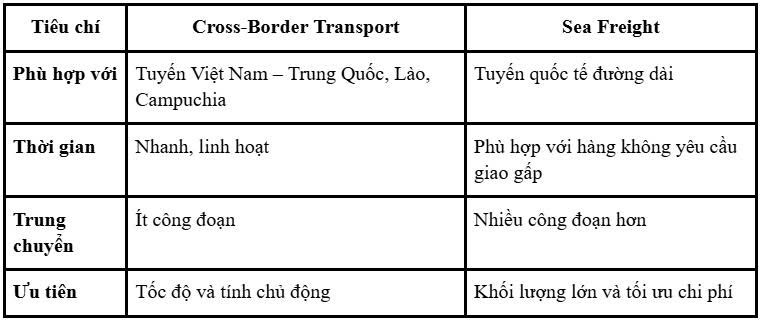
Cross-Border Transport or Sea Freight?
The choice of transportation method depends on the characteristics of each shipment and the operational goals of the business.
As can be seen, Sea Freight remains a suitable option for large-volume shipments or long-distance transport without border crossings. Meanwhile, CBT (Container Load) leverages its advantages when businesses need to shorten delivery times and increase flexibility in the supply chain in regions bordering Vietnam.
Which CBT routes does Bond Global Logistics currently operate?
To meet the growing demand for cross-border transportation, Bond Global Logistics now operates several key shipping routes:
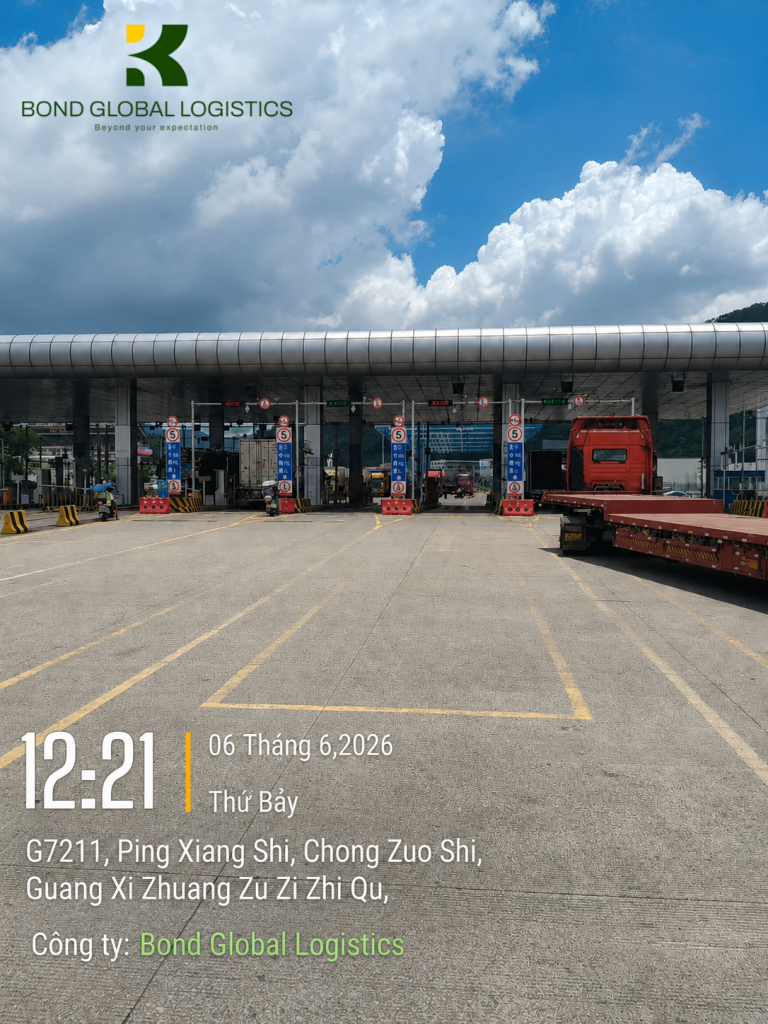
Vietnam - China
Through border crossings:
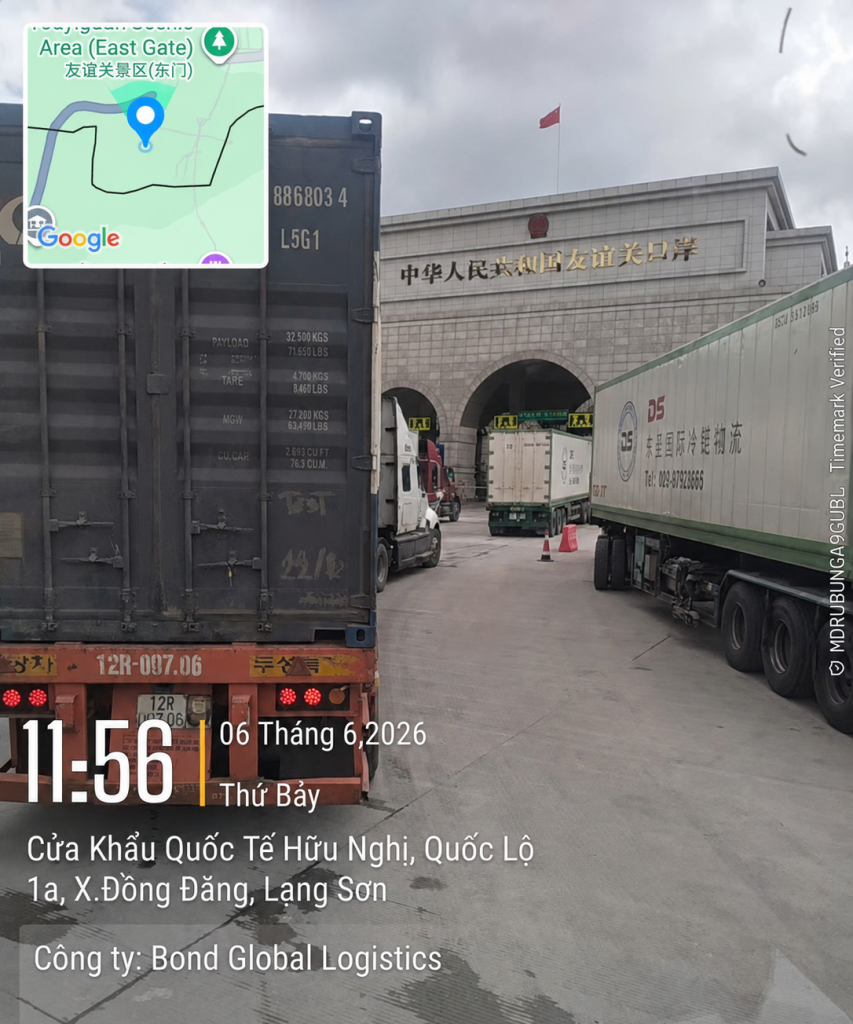
- Huu Nghi (Lang Son)
-Mong Cai (Quang Ninh)
-Lao Cai
This is an important shipping route serving import and export activities between Vietnam and China, especially for industrial goods, electronic components, and manufactured goods.
Vietnam - Laos
Exploitation through border crossings:
- Suspension Bridge (Ha Tinh)
- Cha Lo (Quang Binh)
-Lao Bao (Quang Tri)
The shipping route facilitates efficient connections with the Laotian market and extends to Thailand within the Mekong Subregion.
Vietnam – Cambodia
Through border crossings:
-Moc Bai (Tay Ninh)
-Binh Hiep (Long An)
Suitable for businesses with frequent trade needs between Vietnam and Cambodia due to fast shipping times and convenient connectivity.
Choosing the right shipping method is key to optimizing efficiency.
Each mode of transport has its own advantages. While sea transport is a suitable solution for large shipments and long routes, cross-border transport is an efficient option for businesses that need speed, flexibility, and quick connectivity between countries sharing a common border.
With experience in deploying cross-border transportation services and a network operating at key border gates, Bond Global Logistics provides solutions tailored to each customer's specific needs, helping businesses optimize delivery times, improve supply chain efficiency, and develop sustainable import and export activities.
 |
 |
Share
BOND GLOBAL LOGISTICS
Hotline: (+84) 787 031 104
E-mail: info@bondlogistics.vn
Address: 4th Floor, No. 274 Da Nang Street, Van My Ward, Ngo Quyen District, Hai Phong City, Vietnam.